


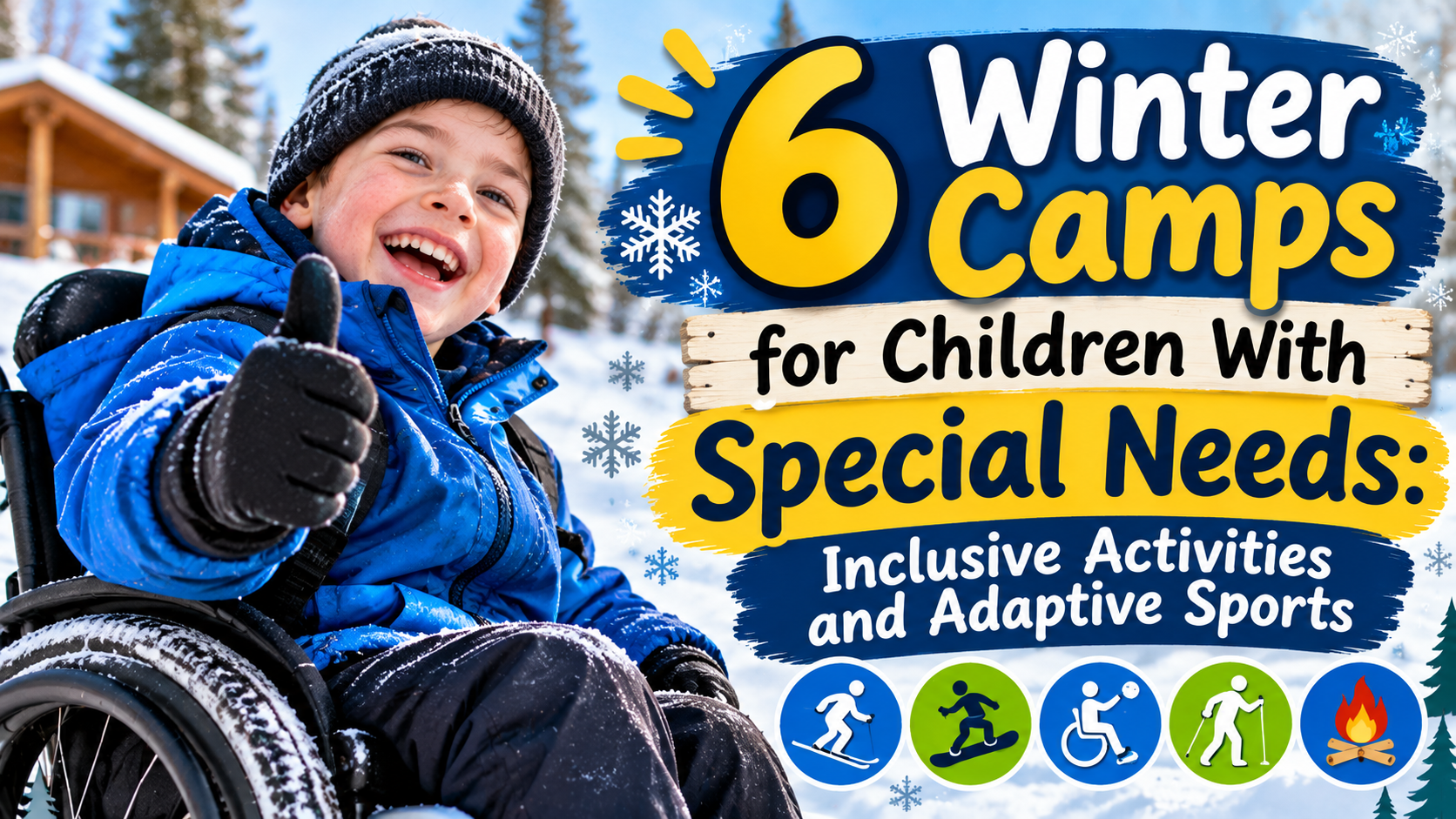
When winter break arrives, many parents start looking for fun activities to keep their children entertained, active, and engaged while school is out. But finding the right winter camp for a child with special needs can take a little more research.
You may be looking for a sensory-friendly winter camp for your autistic child, an inclusive program for a child with ADHD, adaptive sports for a child with a physical disability, or a supportive environment where your child can make friends and participate in activities at their own pace.
The good news is that winter recreation opportunities are available for children with different abilities. Some programs offer traditional winter-break activities, while others provide adaptive skiing, snowboarding, family recreation, and specialized instruction.
The most important thing is finding a program that understands your child’s needs and offers the right accommodations.
In this guide, we are sharing six winter camps and adaptive recreation programs worth exploring, along with tips for choosing a safe and supportive experience for your child.
Please note: Camp dates, registration availability, eligibility, and fees can change each year. The programs below include both traditional winter camps and adaptive winter recreation opportunities. Always contact the provider to confirm current availability and accommodations before making plans.
6 Best Winter Camps and Adaptive Programs for Children With Special Needs
Here is a quick look at the programs featured in this guide.
| Program | Location | Best For |
|---|---|---|
| 7Q Foundation Winter Camp | Vienna, Virginia | Sensory-friendly winter-break activities |
| Adaptive Sports Foundation | Windham, New York | Adaptive skiing and snowboarding |
| National Sports Center for the Disabled | Winter Park, Colorado | Adaptive winter sports and youth race camp |
| Breckenridge Outdoor Education Center | Colorado | Adaptive skiing and snowboarding |
| Double H Ranch | Lake Luzerne, New York | Adaptive winter sports for children with qualifying medical conditions |
| National Ability Center | Park City, Utah | Inclusive family winter recreation |
1. 7Q Foundation: Sensory-Friendly Winter Camp
Location: Vienna, Virginia
Best for: Children ages 5–15 who enjoy sensory exploration, creative activities, movement, and social interaction.
If you are looking for a structured winter-break experience with sensory-friendly activities, the 7Q Foundation’s 7 Senses Inclusive Winter Camp is one program to explore.
Its winter camp is designed for children with and without disabilities and combines creative activities, sensory exploration, movement, STEAM projects, and opportunities to build friendships.
The program focuses on helping children participate in activities in ways that work for their individual needs.
Activities include:
- Winter-themed sensory exploration.
- Arts and crafts.
- Science and STEAM activities.
- Indoor movement games.
- Yoga and mindfulness activities.
- Simple cooking and practical life skills.
- Cooperative games and social activities.
The program also describes accommodations such as visual schedules, quiet regulation spaces, movement breaks, flexible participation, and individualized support.
2026 winter camp dates:
- December 21–23, 2026: Winter Wonderland.
- December 28–30, 2026: New Year, New Adventures.
- Daily hours: 8:30 a.m.–3:30 p.m.
- Ages: 5–15.
The published location is 2351 Hunter Mill Road, Vienna, Virginia 22181. Confirm the final campus and registration details directly with the organization.
Why parents may like this program: It offers more than winter crafts. The combination of sensory activities, movement, social opportunities, and practical life skills may appeal to families looking for a structured and inclusive winter-break experience.
Learn more: https://www.7q-foundation.com/winter2026
2. Adaptive Sports Foundation: Winter Ski and Snowboard Lessons
Location: Windham, New York
Best for: Children and adults with disabilities who want to learn or improve their skiing and snowboarding skills.
Does your child enjoy snow, outdoor activities, or trying something new? The Adaptive Sports Foundation (ASF) offers adaptive winter sports lessons for people with disabilities.
The program provides instruction for individuals with different abilities and experience levels. Lessons are supported by instructors who work to match participants with appropriate instruction and resources.
Children can explore winter sports while developing skills, confidence, and independence.
Program details include:
- Adaptive skiing and snowboarding instruction.
- Weekend and weekday lesson opportunities.
- Half-day and full-day lesson options.
- Equipment rentals and lift tickets included in listed lesson pricing.
- Opportunities for different skill levels.
- Trained adaptive instructors.
2026–2027 winter season: The organization lists weekend lessons from December 12, 2026, through March 22, 2027, along with weekday lessons beginning January 6, 2027.
The published lesson rates are $130 for a half-day and $175 for a full day. Group-home rates are also listed. Confirm current rates, availability, and eligibility when requesting a lesson.
Why parents may like this program: Children who want to experience skiing or snowboarding can receive instruction that is adapted to their abilities instead of being expected to participate in a standard lesson without support.
Learn more: https://www.adaptivesportsfoundation.org/winter-programs/
3. National Sports Center for the Disabled: Adaptive Winter Sports and Race Camp
Location: Winter Park, Colorado
Best for: Children and young people interested in adaptive skiing, snowboarding, and winter sports.
The National Sports Center for the Disabled (NSCD) provides adaptive recreation opportunities for people with disabilities.
Its winter programs include adaptive alpine skiing, snowboarding, Nordic skiing, snowshoeing, and other outdoor experiences.
One program worth exploring is its Adaptive Ski and Snowboard Race Camp.
The Race Camp is designed for participants ages 8 and older with intellectual or developmental disabilities. It introduces participants to ski racing through beginner-friendly training and activities.
Features include:
- Adaptive ski and snowboard instruction.
- Beginner-to-intermediate race training.
- Specialized equipment options.
- Opportunities to learn mountain skills.
- Support from adaptive sports staff.
The program lists sit skis, ski bikes, stand skiing, and snowboards among its equipment options.
2026 winter Race Camp dates: December 18–20, 2026. The program is held at the Winter Park Adaptive Program Center in Winter Park, Colorado. Check the official registration portal for current costs and availability.
Why parents may like this program: It gives young people with intellectual and developmental disabilities an opportunity to experience ski racing in a setting that offers adaptive equipment and instruction.
Learn more:
- Race Camp: https://nscd.org/camps-retreats/race-camp/
- Adaptive winter sports: https://nscd.org/programs/ski-school/
4. Breckenridge Outdoor Education Center: Adaptive Winter Sports Programs
Location: Breckenridge and surrounding Colorado ski areas
Best for: Individuals with disabilities who want adaptive skiing, snowboarding, Nordic skiing, or snowshoeing opportunities.
The Breckenridge Outdoor Education Center (BOEC) offers winter programs for people with disabilities and a range of adaptive recreation needs.
Its programs include adaptive alpine skiing, snowboarding, Nordic skiing, snowshoeing, and other winter experiences.
Participants can receive individualized or group instruction, depending on the program.
Winter activities include:
- Adaptive alpine skiing.
- Snowboarding.
- Nordic skiing.
- Snowshoeing.
- Adaptive ski and snowboard camps.
- Customized group programs.
BOEC works with several Colorado ski areas, including Breckenridge, Keystone, Copper Mountain, and Arapahoe Basin.
The organization announced that reservations for the 2026–2027 season are open, with lessons beginning November 27, 2026.
Why parents may like this program: It offers several different winter activities, allowing families to explore options beyond traditional downhill skiing.
Important: BOEC offers programs for different ages and needs. Contact the organization to confirm the minimum age, support requirements, and whether a particular activity is suitable for your child.
Learn more: https://boec.org/winter/
5. Double H Ranch: Adaptive Winter Sports Program
Location: Lake Luzerne, New York
Best for: Children ages 6–16 with qualifying serious or chronic medical conditions.
Double H Ranch offers an Adaptive Winter Sports Program that gives eligible children an opportunity to experience winter sports in the Adirondack Mountains.
The program has historically offered alpine skiing and snowboarding lessons with adaptive instruction and equipment.
Activities and features include:
- Alpine skiing.
- Snowboarding.
- Adaptive equipment.
- Individualized instruction.
- Family participation opportunities.
- Experienced volunteers and ski patrol support.
The program is particularly valuable for families looking for winter sports opportunities for children who have medical conditions that may make standard ski lessons difficult to access.
Important eligibility information: Double H Ranch serves children with qualifying medical conditions. Families should contact the organization to confirm current eligibility requirements and the documentation needed to apply.
The 2026 winter schedule included weekend lessons in January, February, and March. Those dates have passed as of November 2026, so parents interested in the upcoming season should contact the ranch for its next schedule rather than relying on last year’s dates.
Why parents may like this program: It offers an opportunity for children with qualifying medical conditions to learn winter sports with adaptive support.
Learn more: https://www.doublehranch.org/programs/winter/
6. National Ability Center: Holiday Overnight Family Camp
Location: Park City, Utah
Best for: Families who want to enjoy winter recreation together when a family member has a disability.
Not every child is ready for an independent overnight camp. For some families, a program that allows parents and children to participate together may be a better option.
The National Ability Center offers a Holiday Overnight Family Camp designed for families with a member who has a disability.
The program features adaptive recreation and opportunities for family members to connect and enjoy activities together.
Experiences listed by the organization include:
- Adaptive skiing.
- Climbing.
- Equine learning.
- Community outings.
- Family activities.
- Overnight lodging and meals.
The organization lists a program cost of $780 and indicates that scholarship opportunities may be available. Confirm current dates, pricing, and registration availability directly with the center.
Why parents may like this program: Families can participate together rather than expecting a child to attend a program independently. This may be especially helpful for children who need support from a parent or caregiver in unfamiliar environments.
Learn more: https://nationalabilitycenter.org/program/holiday-overnight-family-camp/
How to Choose the Right Winter Camp for Your Child With Special Needs
Finding a camp that looks exciting online is only the first step.
Before registering, consider your child’s interests, communication needs, sensory preferences, mobility, medical needs, and level of independence.
A program that works wonderfully for one child may not be the right fit for another.
Here are seven questions to ask before choosing a winter camp.
1. Does the Camp Have Experience Supporting Children With Disabilities?
Ask whether camp staff have experience working with children who have autism, ADHD, developmental delays, intellectual disabilities, physical disabilities, or other support needs.
You can also ask about staff training in behavior support, communication, personal care, and emergency procedures.
2. What Accommodations Are Available?
Ask whether the camp can provide accommodations such as:
- Visual schedules.
- Quiet spaces.
- Sensory breaks.
- Flexible participation.
- Smaller groups.
- Additional transition time.
- Accessible facilities.
- Adaptive sports equipment.
- Communication supports.
Do not assume that a camp offers every accommodation simply because it describes itself as inclusive.
3. What Is the Staff-to-Camper Ratio?
A smaller group may provide more opportunities for individualized attention, but the appropriate staffing arrangement depends on your child’s needs.
Ask how many staff members are available, whether one-to-one support is possible, and what happens when a camper needs additional assistance.
4. Can the Camp Support My Child’s Medical or Personal Care Needs?
If your child needs medication, feeding support, mobility assistance, toileting support, or other personal care, discuss those needs before registration.
Ask who is responsible for providing the support and whether the camp has the appropriate staff and procedures.
5. Does the Camp Offer a Schedule My Child Can Understand?
Children who benefit from predictability may feel more comfortable when they know what to expect.
Ask whether the camp provides a daily schedule, activity previews, visual supports, or opportunities to visit before the first day.
6. Are the Activities Adaptable?
Ask whether your child can participate in modified activities or take breaks when needed.
For example, a child who does not enjoy skiing may prefer indoor crafts, sensory activities, or a different winter recreation option.
7. Can Parents Visit or Speak With Staff Before Registration?
If possible, arrange a conversation with the camp director or support staff.
Explain your child’s strengths, preferences, triggers, communication style, and support needs. Ask whether the program believes it can safely and meaningfully accommodate your child.
A good program should be willing to have an honest conversation about what it can and cannot provide.
What to Pack for a Winter Camp for a Child With Special Needs
Winter weather can make camp preparation a little more complicated.
In addition to ordinary camp supplies, your child may need extra clothing, sensory tools, communication supports, or medical supplies.
Consider packing:
- Warm winter coat.
- Snow pants.
- Waterproof gloves or mittens.
- Winter boots.
- Warm socks.
- Hat or earmuffs.
- Extra clothing.
- Water bottle.
- Favorite comfort item, if permitted.
- Communication device or visual supports.
- Approved sensory tools.
- Required medication and medical instructions.
- Written emergency contact information.
For children who experience sensory sensitivities, consider clothing without irritating tags, comfortable layers, and gloves that fit properly.
If your child uses assistive equipment, contact the camp ahead of time to discuss transportation, storage, accessibility, and safe use.
How to Prepare Your Child for Their First Winter Camp
A new camp environment can be exciting, but it may also create uncertainty for children who prefer familiar routines.
Preparing your child ahead of time can make the transition easier.
Create a Visual Schedule
Show your child what the day may look like. Include arrival, activities, snack time, breaks, lunch, and pickup.
Talk About What to Expect
Use simple explanations, pictures, or short videos to introduce the camp environment and activities.
Practice Winter Clothing
If your child has difficulty wearing gloves, hats, boots, or heavy coats, practice putting them on before camp begins.
Introduce New Activities Gradually
If the camp includes skiing, snowboarding, skating, or snowshoeing, talk about the equipment and what your child may experience.
Communicate With Camp Staff
Share information about what helps your child feel comfortable, how they communicate, and what signs may indicate that they need a break.
Plan for Transitions
If your child finds separation difficult, ask the camp whether it offers an orientation, tour, or gradual introduction.

What If You Cannot Find a Winter Camp for Your Child?
Not every community has a specialized winter camp nearby. That does not mean your child has to miss out on winter fun.
You can create a winter activity schedule at home or explore local recreation programs that offer reasonable accommodations.
Here are some ideas:
Indoor winter activities:
- Make snowflake crafts.
- Build an indoor winter sensory bin.
- Complete winter-themed puzzles.
- Create a hot chocolate station.
- Make a winter picture book.
- Try simple winter science experiments.
Outdoor winter activities:
- Build a snowman.
- Take a winter nature walk.
- Make snow angels.
- Explore snow with adapted tools.
- Visit an accessible park.
- Try an adaptive skating or recreation session if available.
Social activities:
- Invite a friend for a winter craft day.
- Organize a small indoor game afternoon.
- Visit a library program.
- Join a community recreation activity.
- Plan a family winter outing.
The goal is to create enjoyable opportunities that match your child’s interests and abilities.
Frequently Asked Questions About Winter Camps for Children With Special Needs
Are there winter camps for children with autism?
Yes. Some inclusive and sensory-friendly winter camps welcome autistic children. Other programs focus on adaptive sports and recreation. Ask about visual schedules, sensory breaks, staff experience, communication support, and individualized accommodations before registering.
What are the best winter activities for children with disabilities?
Winter activities may include adaptive skiing, snowboarding, snowshoeing, skating, indoor crafts, sensory activities, winter science experiments, and family recreation. The best activity depends on your child’s interests, mobility, sensory preferences, and support needs.
Are there free winter camps for children with special needs?
Some organizations offer scholarships, subsidized programs, or no-cost opportunities for eligible participants. Double H Ranch has historically offered its adaptive winter sports program at no cost to qualifying children. Always confirm current fees and eligibility directly with the organization.
Can children with physical disabilities participate in winter sports?
Yes. Adaptive skiing, snowboarding, snowshoeing, and other winter sports may be available through specialized programs. Adaptive equipment and trained instructors can help participants access activities in ways that match their abilities.
What should I ask before registering my child for a special needs winter camp?
Ask about staff training, staffing ratios, medical support, personal care, accessibility, communication accommodations, sensory spaces, emergency procedures, and how the camp handles individual support needs.
Are winter camps only for children with disabilities?
No. Some winter programs are specifically designed for children with disabilities, while others welcome children with and without disabilities. Read each program’s eligibility requirements before applying.
Final Thoughts: Finding a Winter Camp Where Your Child Can Participate and Thrive
Winter break should be an opportunity for children to explore, play, make connections, and enjoy new experiences.
For children with disabilities, finding the right winter camp may require additional planning, but there are organizations offering inclusive activities, sensory-friendly experiences, and adaptive sports opportunities.
Start by considering what your child enjoys. Then look for programs that can support their individual needs, provide appropriate accommodations, and create a welcoming environment.
Whether your child wants to make winter crafts, learn to ski, participate in sensory activities, or enjoy a family recreation weekend, the right opportunity can help make winter break memorable.
Remember: Your child deserves opportunities to participate, make friends, build confidence, and enjoy winter activities in a way that works for them.


