


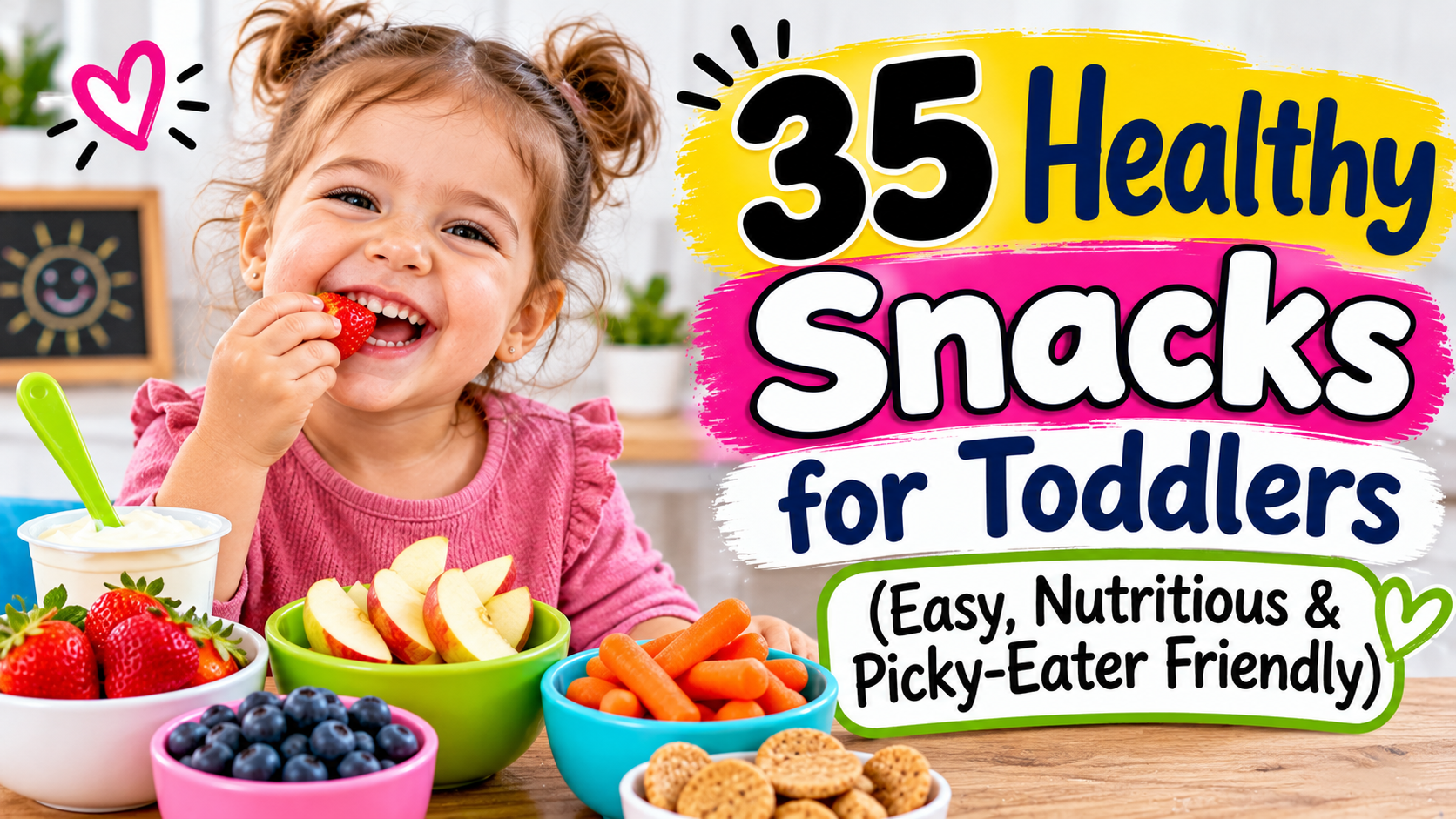
Finding healthy snacks for toddlers can feel like a daily challenge. One day your little one loves bananas, and the next day they refuse to take a single bite! If you are looking for easy, nutritious toddler snacks that are simple to prepare, affordable, and appealing to little eaters, you are in the right place.
Toddlers are busy exploring, learning, playing, and growing. Because their stomachs are small, they may need snacks between meals to help meet their nutritional needs. The trick is choosing foods that provide nutrients without making snack time another stressful part of your day.
Whether you have a picky eater, a toddler who loves fruit, or a little one who wants something different every afternoon, these 35 healthy snacks for toddlers offer plenty of ideas to try.
You will also find simple snack combinations, tips for introducing new foods, make-ahead ideas, and important choking-prevention guidelines to help make snack time safer.
Why Are Healthy Snacks Important for Toddlers?
Toddlers are growing quickly and need a variety of nutrients to support their development. Since they may not eat large amounts at one sitting, snacks can provide another opportunity to offer nutritious foods.
A healthy toddler snack can include:
- Protein: Eggs, yogurt, beans, hummus, and finely prepared meats.
- Fruits: Bananas, strawberries, peaches, pears, and applesauce.
- Vegetables: Soft-cooked carrots, sweet potatoes, peas, and broccoli.
- Whole grains: Oatmeal, whole-wheat toast, and appropriately prepared whole-grain cereals.
- Dairy or fortified alternatives: Plain yogurt, cottage cheese, and suitable fortified soy products.
The American Academy of Pediatrics recommends offering balanced snacks that include a variety of food groups. You do not have to make every snack a complete meal. Focus on offering different nutritious foods throughout the day.
35 Healthy Snacks for Toddlers
Here are 35 simple toddler snack ideas you can rotate throughout the week. Adjust the texture, preparation, and serving size to your child’s developmental abilities.
Healthy Fruit Snacks for Toddlers
Fruit is a convenient way to offer fiber, vitamins, and natural sweetness. Choose ripe, soft fruit when possible and prepare it in an age-appropriate way.
1. Banana Slices
Bananas are soft, naturally sweet, and easy to prepare. Peel a ripe banana and cut it into small, manageable pieces.
2. Strawberries
Wash fresh strawberries, remove the stems, and prepare them into small, appropriate pieces. Very soft ripe strawberries can also be mashed.
3. Applesauce
Unsweetened applesauce is a quick snack that requires very little preparation. Serve it in a small bowl or reusable container.
4. Soft Peach Pieces
Choose ripe peaches, remove the pit, and peel if needed. Cut the fruit into small, soft pieces.
5. Mashed Avocado
Avocado provides healthy unsaturated fats and has a naturally creamy texture. Mash it and serve it alone or spread a thin layer onto toast.
6. Pear Pieces
Use ripe, soft pears. Peel if necessary, remove the seeds and core, and cut into small pieces. Cook firmer pears until soft.
7. Blueberry Yogurt
Mix mashed blueberries into plain, unsweetened yogurt. Avoid serving whole round blueberries to young children; mash or cut them appropriately.
Healthy Vegetable Snacks for Toddlers
Vegetables introduce different flavors, textures, and nutrients. If your toddler refuses vegetables at first, keep offering them alongside familiar foods without pressure.
8. Soft Sweet Potato Cubes
Bake or steam sweet potatoes until very soft. Allow them to cool and cut them into small pieces.
9. Steamed Broccoli
Steam broccoli until tender. Chop it into manageable pieces and remove any tough stems.
10. Mashed Green Peas
Cook peas until soft and mash them lightly with a fork. You can serve them alone or mix them into mashed potatoes.
11. Soft-Cooked Carrots
Steam or boil carrots until they are easy to mash with a fork. Avoid offering hard raw carrot sticks.
12. Mashed Butternut Squash
Cook butternut squash until soft and mash it into a smooth or slightly textured snack.
13. Avocado and Pea Mash
Combine mashed avocado and cooked, mashed peas for a creamy vegetable snack.
14. Soft-Cooked Cauliflower
Steam cauliflower until tender and chop or mash it into an appropriate texture.
Protein-Rich Toddler Snacks
Protein foods can help make snacks more satisfying. Try rotating different options so your toddler gets exposure to a variety of flavors.
15. Plain Greek Yogurt
Serve plain, unsweetened Greek yogurt in a small bowl. Add mashed fruit for extra flavor.
16. Scrambled Eggs
Prepare eggs until fully cooked. Let them cool and cut them into small, soft pieces.
17. Cottage Cheese
Offer pasteurized cottage cheese in a small portion. Choose a lower-sodium option when available.
18. Hummus and Soft Pita
Serve a thin layer of smooth hummus with soft pita pieces that are prepared to an appropriate texture. Check the ingredient list for potential allergens.
19. Mashed Black Beans
Cook beans until soft and mash them. You can serve them alone or spread a thin layer on soft toast.
20. Soft Tofu Pieces
Choose soft tofu and prepare it into small, manageable pieces. You can serve it plain or mix it with mashed vegetables.
21. Thin Peanut Butter Toast
If your child has safely been introduced to peanut, spread a very thin layer of smooth peanut butter onto toast. Never offer a spoonful or thick, sticky glob of peanut butter.
Healthy Grain and Dairy Snacks
Whole grains and dairy foods can provide energy and important nutrients. Choose options with little or no added sugar and prepare them safely.
22. Oatmeal with Mashed Banana
Prepare oatmeal until soft and stir in mashed banana. Allow it to cool before serving.
23. Whole-Wheat Toast
Cut soft toast into manageable pieces. Add a thin spread of avocado, hummus, or another safely introduced spread.
24. Cheese and Soft Fruit
Offer a small amount of pasteurized cheese with ripe, soft fruit. Shred or prepare cheese into a safe texture rather than serving large cubes.
25. Homemade Mini Pancakes
Make small pancakes using oats, egg, and mashed banana. Cook thoroughly and cut into manageable pieces.
26. Soft Pasta
Cook small pasta shapes until tender. Toss with a little olive oil or mashed vegetables.
27. Unsweetened Yogurt with Oats
Mix plain yogurt with softened oats. Let the oats absorb moisture so the mixture is easy to eat.
28. Homemade Banana Oat Bites
Combine mashed banana with oats and bake until fully cooked. Make sure the finished texture is soft and not hard, dry, or crumbly.
Easy Toddler Snacks for Busy Days
Sometimes you need something that takes less than five minutes to prepare. These ideas can help when you are short on time.
29. Unsweetened Fruit Cups
Choose soft fruit packed in water or its own juice. Drain and prepare the fruit into appropriate pieces.
30. Soft Cheese Quesadilla
Place a small amount of shredded cheese between two soft tortillas. Heat until the cheese melts, allow it to cool, and cut into small pieces.
31. Banana and Yogurt Bowl
Mash a ripe banana into plain yogurt for a quick snack.
32. Mashed Chickpeas
Mash cooked chickpeas with a little olive oil or plain yogurt. Make sure the texture is soft and easy to manage.
33. Sweet Potato Toast
Use fully cooked sweet potato slices as a soft base for a thin layer of avocado or another suitable topping.
34. Egg and Avocado Mash
Combine fully cooked, chopped egg with mashed avocado for a creamy snack.
35. Soft Fruit and Oatmeal Bowl
Mix cooked oatmeal with mashed peaches, pears, or bananas. Serve at a safe temperature and texture.
10 Easy Healthy Toddler Snack Combinations
If you are tired of serving the same snack every day, try combining foods from different food groups.
| Snack combination | What to serve |
|---|---|
| 1. Banana breakfast bowl | Plain yogurt + mashed banana |
| 2. Sweet potato snack | Soft sweet potato + mashed black beans |
| 3. Fruit and dairy | Cottage cheese + soft peach pieces |
| 4. Avocado toast | Soft toast + thin avocado spread |
| 5. Berry yogurt | Plain yogurt + mashed berries |
| 6. Egg snack | Fully cooked scrambled egg + soft avocado |
| 7. Oatmeal bowl | Cooked oatmeal + mashed pear |
| 8. Veggie mash | Mashed peas + sweet potato |
| 9. Hummus snack | Smooth hummus + soft pita pieces |
| 10. Banana pancakes | Soft homemade banana-oat pancakes |
These combinations are suggestions, not strict rules. Your toddler does not need every food group at every snack. Variety over the course of the day is what matters.
Healthy Snacks for Picky Toddlers
Does your toddler refuse vegetables, turn away from unfamiliar foods, or insist on eating the same snack every day?
You are not alone. Picky eating is common during toddlerhood. Children are learning about new flavors and textures, and their appetites can change from day to day.
Here are some ways to make snack time easier:
1. Pair a New Food with a Familiar Favorite
If your toddler loves bananas, serve a small amount of a new fruit alongside them. A familiar food can make trying something different feel less intimidating.
2. Offer Small Portions
A plate filled with unfamiliar foods may feel overwhelming. Start with a small amount and offer more if your child wants it.
3. Let Your Toddler Explore Food
Allow your child to look at, touch, smell, and taste foods at their own pace. Exploring food is part of learning to eat.
4. Offer Foods More Than Once
A toddler may reject a food the first time and accept it later. Continue offering different foods without forcing your child to eat them.
5. Make Snacks Colorful
Try combining naturally colorful foods, such as mashed avocado, soft sweet potatoes, bananas, and strawberries prepared safely.
6. Avoid Using Food as a Reward
Try not to make dessert or sweets a reward for eating vegetables. Keep food neutral and encourage your toddler to listen to hunger and fullness cues.
7. Eat Together
Children often learn by watching adults. When possible, sit together and enjoy some of the same nutritious foods.
Healthy Toddler Snacks to Make Ahead
Preparing a few snacks ahead of time can make busy mornings and afternoons easier.
Consider preparing:
- Individual portions of unsweetened applesauce.
- Cooked sweet potatoes stored in the refrigerator.
- Washed and appropriately prepared soft fruit.
- Cooked oatmeal divided into small portions.
- Mashed beans stored in airtight containers.
- Homemade soft banana-oat pancakes.
- Plain yogurt with fruit added just before serving.
Food safety reminder: Refrigerate perishable foods promptly, follow safe storage times, and discard food that has been left out too long or contaminated by your child’s saliva. Do not leave prepared snacks sitting at room temperature for extended periods.
Toddler Snack Schedule: Simple Daily Example
A predictable eating routine can help toddlers know when to expect food. The exact schedule depends on your child’s sleep, appetite, and family routine.
Here is an example of how snacks might fit into a day:
| Time | Snack idea |
|---|---|
| 9:30 AM | Plain yogurt with mashed banana |
| 3:00 PM | Soft sweet potato and mashed beans |
| Optional morning or afternoon snack | Applesauce or soft fruit |
Some toddlers need more or fewer snacks. Follow your child’s hunger and fullness cues, and ask your pediatrician about an eating routine if you have concerns.
Important: Toddler Snack Safety and Choking Prevention
Healthy food is only a good choice when it is prepared safely. Young children are still developing the chewing and swallowing skills needed to manage different textures.
The CDC warns that foods can become choking hazards because of their shape, size, hardness, or stickiness.
Foods to Avoid or Prepare Carefully
For young children, avoid serving these foods whole or in unsafe forms:
- Whole grapes and cherry tomatoes.
- Whole nuts and seeds.
- Popcorn.
- Hard raw carrots and apple chunks.
- Large chunks of meat or cheese.
- Hot dogs and sausage rounds.
- Thick spoonfuls of peanut butter or other nut butters.
- Hard candy, gummies, and marshmallows.
- Large or firm pieces of dried fruit.
Some foods can be made safer with appropriate preparation, but others should be avoided for young children.
How to Reduce Choking Risks
Follow these important safety practices:
- Have your toddler sit upright in a high chair or appropriate seat while eating.
- Never allow your child to walk, run, crawl, or play with food in their mouth.
- Cut, mash, or cook foods to a texture appropriate for your child’s eating skills.
- Remove pits, seeds, bones, and tough skins when needed.
- Supervise your child closely throughout snack time.
- Keep meals calm and avoid rushing your toddler.
- Learn age-appropriate choking first aid from a qualified provider.
A food’s size and texture should be appropriate for your individual child’s developmental abilities. If your toddler has difficulty chewing or swallowing, speak with their pediatrician before changing food textures.
What Drinks Should Toddlers Have with Snacks?
Water and age-appropriate milk are generally the best everyday drink choices for toddlers.
A few helpful guidelines:
- Offer water throughout the day.
- Serve plain, pasteurized milk when appropriate for your child’s age and dietary needs.
- Avoid making juice, soda, sweet tea, and sugary drinks everyday choices.
- Choose plain yogurt and other foods with little or no added sugar.
- Ask your child’s pediatrician about suitable fortified alternatives if your child cannot drink cow’s milk.
For children under 2, avoid foods and beverages with added sugars. The CDC and USDA also recommend avoiding added sugars and low-calorie sweeteners for infants and young children.
Frequently Asked Questions About Healthy Snacks for Toddlers
What are the healthiest snacks for toddlers?
Some nutritious choices include plain yogurt, bananas, mashed avocado, soft-cooked sweet potatoes, scrambled eggs, oatmeal, mashed beans, and appropriately prepared fruit and vegetables. Offering a variety of food groups helps provide different nutrients.
How many snacks should a toddler eat each day?
Many toddlers do well with two to three planned snacks in addition to meals, depending on their appetite and routine. Avoid constant grazing throughout the day, and allow your child to respond to hunger and fullness cues.
What are easy snacks for toddlers who are picky eaters?
Start with familiar foods your child already enjoys. Try plain yogurt with mashed fruit, banana oatmeal, soft sweet potatoes, avocado toast, or scrambled eggs. Introduce unfamiliar foods in small amounts without pressure.
What are healthy snacks for toddlers on the go?
Unsweetened applesauce in a pouch, a small container of plain yogurt kept cold, or appropriately prepared soft fruit can be convenient choices. Always consider food temperature, storage, choking risks, and supervision. Do not allow toddlers to eat while walking or riding in a moving vehicle.
Are crackers a healthy snack for toddlers?
Some crackers can fit into a varied diet, but check the ingredients for added sodium, added sugar, and hard or sharp textures. Choose an age-appropriate option and supervise your child while eating. Crackers with whole nuts, seeds, or hard pieces are not suitable for young children.
Can toddlers eat peanut butter?
Peanut butter may be offered when peanuts have been safely introduced and there is no known allergy requiring medical guidance. Serve it in a very thin layer or mixed into another food. Never give a toddler a thick spoonful or sticky glob of peanut butter. If your child has a history of food allergy or severe eczema, ask their healthcare provider about safe introduction.
What snacks should toddlers avoid?
Avoid common choking hazards such as whole grapes, whole nuts, popcorn, hard raw vegetables, hard candy, marshmallows, and thick spoonfuls of nut butter. Also limit foods and drinks high in added sugar and sodium.
Are fruit snacks healthy for toddlers?
Packaged chewy fruit snacks are not the same as fresh fruit and can pose choking risks. Choose soft, appropriately prepared fresh fruit instead.
Final Thoughts: Make Healthy Toddler Snacking Simple
You do not need expensive ingredients or complicated recipes to offer healthy snacks for toddlers. A few everyday foods—such as bananas, yogurt, eggs, oatmeal, avocado, and soft-cooked vegetables—can create plenty of nutritious combinations.
Keep offering variety, make food available in safe textures, and let your toddler decide how much to eat. Some days your little one may eat everything you serve, while other days they may barely touch their snack. That is part of learning to eat.
The goal is not to make every snack perfect. It is to build positive eating habits, offer nutritious choices, and make snack time a little easier for your family.
Save this list of 35 healthy toddler snacks so you always have easy ideas ready for your next snack time!


