


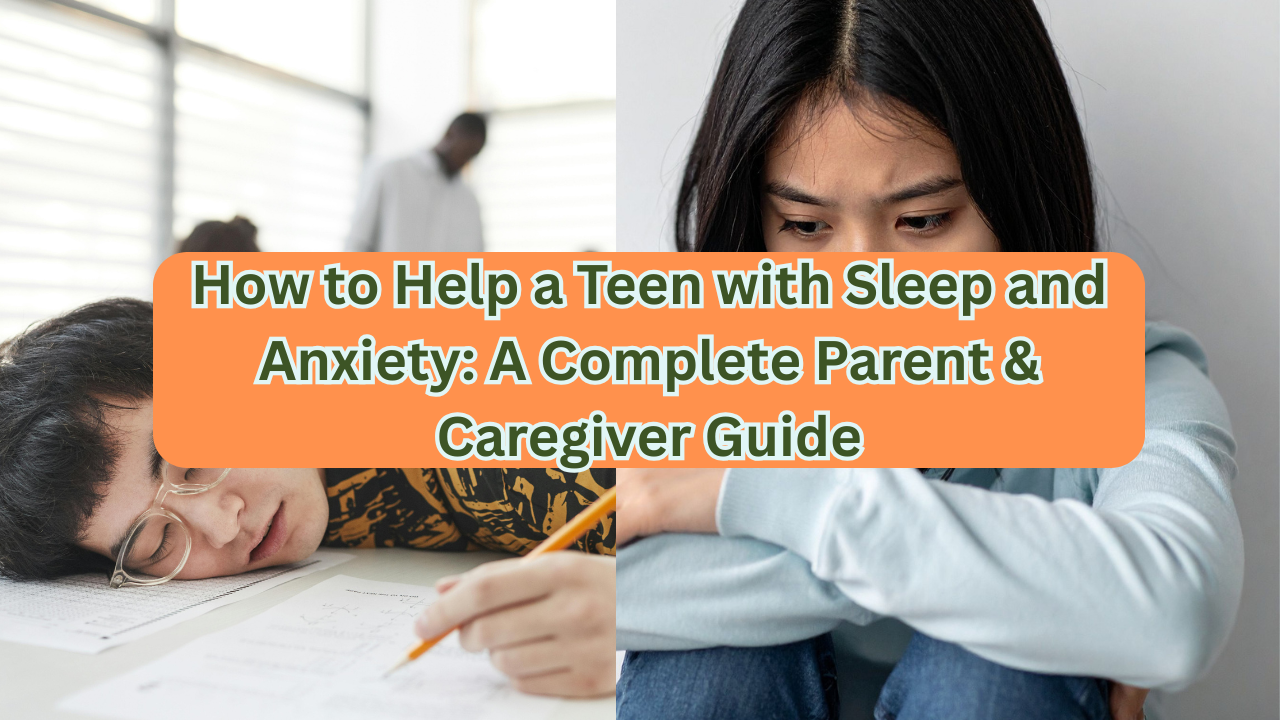
Helping a teenager manage sleep and anxiety can feel overwhelming. Many parents notice their teen lying awake at night, worrying about school, friendships, social media, or the future. Lack of sleep can make anxiety worse, and anxiety can make sleep nearly impossible — creating a frustrating cycle for teens and families.
The good news? With the right strategies, support, and routines, teens can improve both their sleep and anxiety levels. In this comprehensive guide, you’ll learn practical, science-supported ways to help teens relax, sleep better, and feel more emotionally balanced.
This article is written for parents, caregivers, and educators looking for realistic and compassionate ways to support teens, while also being easy to share on Pinterest, Reddit, and Facebook.

Why Teen Sleep and Anxiety Are So Closely Connected
Teen sleep struggles are incredibly common. Biological changes during adolescence shift the body’s internal clock later at night, making teens naturally want to stay awake longer and sleep later.
At the same time, teens are navigating:
-
Academic pressure
-
Social challenges
-
Identity development
-
Social media comparison
-
Hormonal changes
All of these factors can increase anxiety.
When anxiety increases, the brain stays in “alert mode.” This activates stress hormones that make it harder to fall asleep.
Sleep deprivation then worsens:
-
Mood swings
-
Irritability
-
Focus and memory
-
Emotional regulation
-
Anxiety symptoms
This sleep-anxiety loop can quickly spiral without support.
But understanding the connection helps parents take targeted steps to break the cycle.

Signs a Teen Is Struggling with Sleep and Anxiety
Not all teens openly talk about anxiety or sleep issues. Many try to push through it or hide their struggles.
Here are some common warning signs to watch for.
Emotional Signs
-
Constant worrying
-
Feeling overwhelmed by small problems
-
Irritability or mood swings
-
Avoiding school or activities
-
Increased sensitivity to criticism
Sleep-Related Signs
-
Trouble falling asleep
-
Waking up frequently during the night
-
Sleeping extremely late on weekends
-
Feeling exhausted during the day
-
Napping frequently after school
Physical Signs
Anxiety often appears in physical ways.
Common symptoms include:
-
Headaches
-
Stomach aches
-
Muscle tension
-
Restlessness
-
Rapid heartbeat
Recognizing these patterns early allows parents to support their teen before problems grow.

12 Proven Ways to Help Teens Sleep Better and Reduce Anxiety
These strategies focus on building healthy habits, emotional support, and calming routines.
Even small changes can lead to big improvements.
1. Create a Consistent Sleep Schedule
Teens thrive when their sleep schedule stays consistent.
Encourage them to:
-
Go to bed at the same time each night
-
Wake up at the same time every morning
-
Avoid major weekend sleep shifts
Large schedule changes (like staying up until 2 AM on weekends) can disrupt the body’s circadian rhythm.
Tip: Try adjusting bedtime gradually by 15 minutes per night if your teen needs to move their schedule earlier.
2. Build a Relaxing Nighttime Routine
A calming bedtime routine signals the brain that it’s time to sleep.
Good bedtime habits might include:
-
Reading a book
-
Listening to calming music
-
Gentle stretching
-
Taking a warm shower
-
Journaling thoughts
Encourage your teen to start their wind-down routine 30–60 minutes before bed.
3. Limit Screen Time Before Bed
Phones, tablets, and laptops emit blue light, which can delay melatonin production — the hormone that helps us sleep.
Late-night social media can also increase anxiety.
Consider creating a family “digital sunset” rule where screens turn off about one hour before bedtime.
Many teens find sleep improves quickly when this boundary is introduced.
4. Encourage Physical Activity During the Day
Exercise is one of the most powerful natural anxiety reducers.
Physical activity helps by:
-
Releasing mood-boosting endorphins
-
Reducing stress hormones
-
Improving sleep quality
Good teen activities include:
-
Walking
-
Sports
-
Yoga
-
Dance
-
Bike rides
Even 20–30 minutes of movement per day can significantly improve sleep.

5. Teach Simple Relaxation Techniques
Relaxation techniques can help teens calm their nervous system before sleep.
Easy techniques include:
Deep Breathing
Slow breathing signals the brain that the body is safe.
Try this pattern:
-
Inhale for 4 seconds
-
Hold for 4 seconds
-
Exhale for 6 seconds
Repeat for several minutes.
Progressive Muscle Relaxation
This technique involves slowly tightening and relaxing muscle groups.
It helps release built-up physical tension.
6. Help Teens Manage Worry Before Bed
Many teens experience “bedtime worry spirals.”
When the room gets quiet, anxious thoughts often become louder.
Encourage your teen to try a worry journal.
Before bed they can write:
-
What they’re worried about
-
Possible solutions
-
Things outside their control
This helps the brain release the thoughts instead of replaying them all night.
7. Create a Comfortable Sleep Environment
The bedroom should feel calm and relaxing.
Helpful adjustments include:
-
Keeping the room dark
-
Using blackout curtains
-
Maintaining a cool temperature
-
Using white noise if needed
-
Removing clutter
Some teens also find comfort in:
-
Aromatherapy
-
Soft lighting
8. Talk About Anxiety Without Judgment
One of the most powerful ways to help teens is simply listening.
Teens need to feel safe sharing their feelings.
Instead of saying:
“Don’t worry about it.”
Try saying:
-
“That sounds really stressful.”
-
“Tell me more about what’s going on.”
-
“I’m here to help you figure this out.”
Validation builds trust and helps teens open up.
9. Teach Healthy Coping Skills
Teens often need guidance learning how to handle stress.
Healthy coping tools include:
-
Journaling
-
Listening to music
-
Talking with friends
Encourage them to experiment with different strategies.
Everyone finds calm in different ways.
10. Reduce Overloaded Schedules
Many teens today are over-scheduled and exhausted.
Between school, homework, sports, and activities, they may feel constant pressure.
Evaluate whether your teen’s schedule allows time for:
-
Relaxation
-
Sleep
-
Social connection
-
Hobbies
Sometimes removing one extra commitment can dramatically improve well-being.
11. Watch for Caffeine Intake
Many teens consume caffeine without realizing how much they are getting.
Common sources include:
-
Energy drinks
-
Coffee
-
Soda
-
Chocolate
Caffeine can stay in the body for 6–8 hours, making it harder to fall asleep.
Encourage teens to avoid caffeine after mid-afternoon.
12. Consider Professional Support When Needed
If anxiety or sleep issues persist, professional support can make a huge difference.
Helpful options include:
-
Therapists
-
Pediatricians
-
School counselors
-
Sleep specialists
Cognitive Behavioral Therapy (CBT) is particularly effective for teen anxiety and sleep problems.
Seeking help is a strength — not a failure.
Tips for Parents Supporting Anxious Teens
Supporting a struggling teen can feel emotionally draining.
Remember to:
-
Stay patient
-
Keep communication open
-
Model healthy stress management
-
Celebrate small improvements
-
Take care of your own well-being too
Teens often learn coping skills by watching the adults around them.
Daily Habits That Improve Teen Mental Health
Small daily habits add up over time.
Encourage teens to focus on:
-
Getting sunlight in the morning
-
Eating balanced meals
-
Drinking enough water
-
Limiting social media comparison
-
Spending time outdoors
-
Maintaining friendships
These habits strengthen both mental health and sleep quality.

When Teen Anxiety and Sleep Problems Become Serious
Sometimes sleep and anxiety issues require immediate attention.
Warning signs include:
-
Panic attacks
-
Severe insomnia
-
Withdrawal from friends and activities
-
Declining school performance
-
Thoughts of self-harm
If these signs appear, reach out to a mental health professional immediately.
Early intervention is extremely effective.
Frequently Asked Questions About Teen Anxiety and Sleep
Teen Anxiety FAQ
1. What causes anxiety in teenagers?
Teen anxiety can come from many sources including school pressure, social stress, hormonal changes, social media comparison, and worries about the future.
2. Is teen anxiety normal?
Some anxiety is normal during adolescence. However, when worry becomes constant or interferes with daily life, additional support may be helpful.
3. How can parents talk to teens about anxiety?
Use open-ended questions and avoid dismissing their concerns. Listening calmly and validating their feelings helps teens feel safe sharing their struggles.
4. Can anxiety affect school performance?
Yes. Anxiety can make it difficult for teens to focus, retain information, and participate in class discussions.
5. Should teens see a therapist for anxiety?
If anxiety is persistent, intense, or interfering with daily life, a therapist can provide valuable coping tools and emotional support.

Teen Sleep FAQ
6. How much sleep do teenagers need?
Most teens need 8–10 hours of sleep per night for healthy brain development and emotional regulation.
7. Why do teens stay up so late?
Teen circadian rhythms shift later during puberty, making them naturally feel more alert at night and sleepy later in the morning.
8. What time should teens go to bed?
Bedtime depends on school schedules, but many teens need to fall asleep between 9:30 PM and 11:00 PM to get enough rest.
9. Are naps bad for teenagers?
Short naps (20–30 minutes) can help, but long naps late in the day can interfere with nighttime sleep.
10. How can teens fall asleep faster?
Helpful strategies include limiting screens before bed, creating a calming routine, practicing relaxation exercises, and maintaining a consistent sleep schedule.

Final Thoughts: Supporting Teens Through Sleep and Anxiety Challenges
Helping a teen manage anxiety and sleep problems takes patience, compassion, and consistency.
The most important things you can offer are:
-
Understanding
-
Emotional support
-
Healthy routines
-
Professional guidance when needed
Remember that progress often happens gradually.
Small improvements in sleep habits and anxiety management can lead to major changes in a teen’s mental health, confidence, and daily happiness.
With the right tools and support system, teens can learn lifelong skills that help them manage stress, sleep well, and thrive emotionally.


