


Affiliate Disclosure: This post may contain affiliate links. We may earn a small commission from qualifying purchases at no extra cost to you.
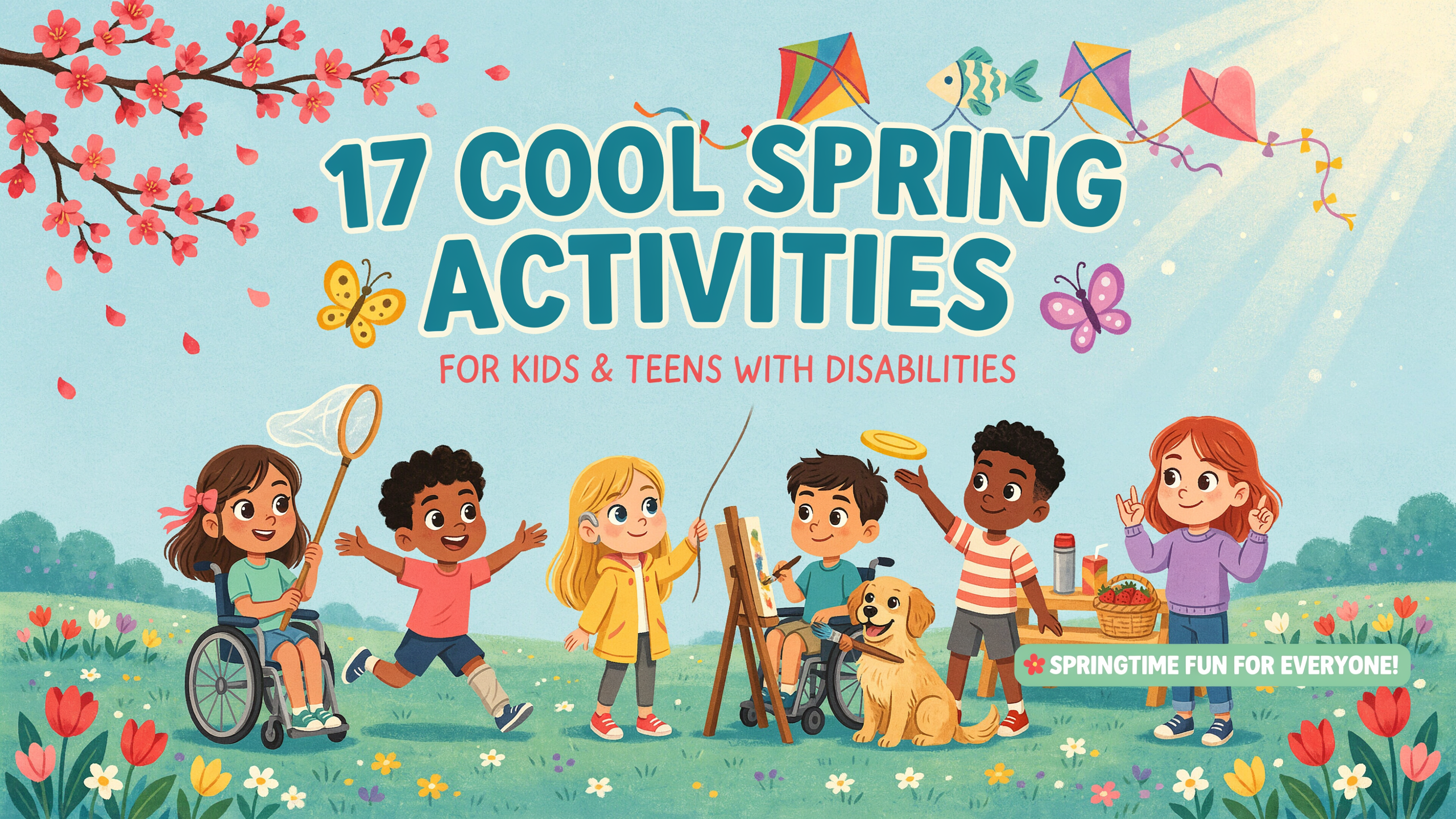
Spring is the perfect time to get outside, explore nature, try something creative, and spend quality time together. After spending so much time indoors during the colder months, children and teens are often ready for new adventures.
But finding spring activities that work for children with different abilities can sometimes be challenging. Parents and caregivers want activities that are fun, engaging, affordable, and accessible without making their child feel left out.
The good news is that you don’t need expensive outings or complicated equipment to create memorable spring experiences.
From sensory-friendly gardening and nature scavenger hunts to backyard movie nights and accessible outdoor games, there are plenty of ways to enjoy the season.
Whether your child has autism, ADHD, a physical disability, an intellectual or developmental disability, or sensory processing differences, these 17 spring activities can be adapted to their interests and support needs.
The goal isn’t to make every child participate in exactly the same way. It’s to create opportunities for everyone to enjoy spring in a way that works for them.
17 Fun Spring Activities for Kids and Teens With Disabilities
1. Create a Sensory Spring Garden
Best for: Children and teens who enjoy nature, hands-on activities, and sensory exploration.
Gardening is a wonderful way to introduce children to the sights, sounds, smells, and textures of spring.
They can explore colorful flowers, watch seeds grow, water plants, and learn how to care for something over time.
What you’ll need:
- Small flowerpots or raised garden beds.
- Potting soil.
- Seeds or starter plants.
- Child-friendly gardening tools.
- A small watering can.
How to do it:
- Let your child choose a few flowers, herbs, or vegetables.
- Fill a container with potting soil.
- Help them place the seeds or plants into the soil.
- Water the plants together.
- Create a simple watering schedule.
- Check the plants regularly to watch them grow.
Make it accessible: Use raised planters for children who have difficulty bending or reaching the ground. Offer gardening gloves, adapted handles, or a scoop if touching soil is uncomfortable.
Choose non-toxic plants and consider allergies and sensory preferences before starting.
2. Go on a Spring Nature Scavenger Hunt
Best for: Children and teens who enjoy exploring and observing their surroundings.
A spring scavenger hunt turns an ordinary walk into an exciting adventure.
Instead of simply walking around the neighborhood or park, give your child a list of things to find.
Spring scavenger hunt ideas:
- A yellow flower.
- A green leaf.
- A butterfly.
- A bird.
- A tree with new buds.
- A smooth rock.
- A cloud shaped like an animal.
- Something that smells pleasant.
- Something that makes an interesting sound.
How to do it:
- Create a picture-based or written scavenger hunt checklist.
- Choose a safe location.
- Give your child a clipboard, pencil, or phone camera.
- Explore together and check off each item.
- Celebrate everything they discover.
Make it accessible: Choose a paved or accessible path, shorten the route, and let children photograph items instead of collecting them. For children with visual impairments, include sounds, textures, and smells when appropriate.
3. Have a Backyard Picnic
Best for: Families looking for a simple, low-cost spring activity.
You don’t need to visit a restaurant or travel far to enjoy a picnic. Your backyard, patio, balcony, or a nearby accessible park can work.
What you’ll need:
- A blanket or outdoor seating.
- Favorite snacks and drinks.
- A picnic basket.
- Sunscreen and hats.
- A few outdoor games.
How to do it:
- Allow your child to help choose the food.
- Set up a comfortable outdoor space.
- Bring a favorite book, game, or activity.
- Enjoy lunch or an afternoon snack together.
- Take time to notice the sunshine, flowers, and fresh air.
Make it accessible: Bring chairs instead of relying on a blanket, choose a shaded location, and accommodate dietary needs. If outdoor sounds are overwhelming, bring noise-reducing headphones.
4. Make Spring-Themed Arts and Crafts
Best for: Creative children and teens who enjoy hands-on projects.
Spring crafts are an excellent way to explore colors, practice creativity, and make decorations for the home or classroom.
Try these projects:
- Paper flowers.
- Butterfly paintings.
- Flower crowns.
- Spring greeting cards.
- Painted flowerpots.
- Paper plate rainbows.
- Nature-inspired collages.
How to do it:
- Choose a craft based on your child’s interests.
- Gather the necessary supplies.
- Show an example of the finished project.
- Break the project into smaller steps.
- Allow your child to choose their own colors and decorations.
Make it accessible: Use larger paintbrushes, pre-cut shapes, adaptive scissors, glue sticks, or visual step-by-step directions. Teens can create more detailed artwork, room decorations, or personalized gifts.
5. Blow Bubbles in the Backyard
Best for: Children who enjoy movement, visual activities, and outdoor play.
Bubbles are an inexpensive way to enjoy a beautiful spring afternoon.
Children can watch bubbles float, pop them, chase them, or simply observe their movement.
What you’ll need:
- Bubble solution.
- Bubble wands.
- A bubble machine (optional).
How to do it:
- Find a safe outdoor area.
- Pour bubble solution into a container.
- Invite your child to blow or pop bubbles.
- Try making large and small bubbles.
- Count how many bubbles you can catch.
Make it accessible: Use a bubble machine if blowing is difficult. Children who prefer not to touch bubbles can watch them float or use a wand with assistance.
6. Go on a Spring Photography Walk
Best for: Older children and teens who enjoy technology, creativity, and nature.
Give your child a phone or camera and encourage them to photograph things they find interesting.
This activity can turn a simple outdoor walk into a creative photography adventure.
Photo ideas:
- Flowers.
- Trees.
- Birds.
- Clouds.
- Interesting shadows.
- Colorful buildings.
- Spring decorations.
- Insects from a safe distance.
How to do it:
- Choose a safe outdoor location.
- Give your child a camera or phone.
- Create a list of five things to photograph.
- Allow them to explore at their own pace.
- Look through the pictures together afterward.
Make it accessible: Use a tablet, adapted camera grip, voice control, or assistance with taking pictures. Teens can edit their photos or create a digital spring photo album.
7. Create a Spring Sensory Bin
Best for: Children who enjoy sensory exploration and hands-on play.
A spring sensory bin can provide an opportunity to explore different textures and objects in a controlled environment.
What you’ll need:
- A shallow plastic storage container.
- Artificial flowers.
- Large plastic insects.
- Scoops and cups.
- Green shredded paper or another safe filler.
- Optional plastic gardening tools.
How to do it:
- Place the filler into a shallow container.
- Add artificial flowers and large toy insects.
- Include scoops, cups, and other tools.
- Invite your child to explore.
- Ask them to sort objects by color, shape, or size if they enjoy structured activities.
Make it accessible: Offer tools instead of requiring direct contact with materials. Avoid small objects that could create choking hazards, and supervise children who may put materials in their mouths.
8. Enjoy a Spring-Themed Baking Day
Best for: Children and teens who enjoy cooking and following simple instructions.
Baking is a fun way to spend time together while practicing everyday skills.
Try making:
- Flower-shaped cookies.
- Fruit kabobs.
- Spring cupcakes.
- Rainbow fruit plates.
- Decorated sugar cookies.
- Homemade muffins.
How to do it:
- Choose a simple recipe.
- Gather the ingredients.
- Show your child the recipe steps.
- Let them help measure, stir, decorate, or arrange ingredients.
- Enjoy the finished treat together.
Make it accessible: Use visual recipes, measuring cups with large handles, pre-measured ingredients, and adapted utensils. Adults should supervise hot ovens, sharp tools, and food preparation.
9. Have a Spring Water Play Day
Best for: Children who enjoy water activities and supervised outdoor play.
Water play can be a fun way to enjoy warmer weather.
You don’t need a swimming pool. A small water table, plastic basin, or sprinkler may be enough.
Activity ideas:
- Pour water between cups.
- Float plastic toys.
- Use water squirters.
- Wash outdoor toys.
- Paint the sidewalk with water and large paintbrushes.
- Play with floating boats.
Make it accessible: Provide seated options, adapted water toys, and containers at a comfortable height. Always supervise children around water, including shallow containers, and consider temperature and sensory preferences.
10. Visit a Local Park or Botanical Garden
Best for: Families who want to enjoy nature outside the home.
Spring is a beautiful time to visit a park, garden, or nature center.
Children can see blooming flowers, watch birds, enjoy outdoor spaces, and discover new things.
Before visiting, check:
- Accessible entrances and pathways.
- Accessible restrooms.
- Parking availability.
- Seating and shaded areas.
- Noise and crowd levels.
- Quiet spaces or less busy visiting times.
Make it accessible: Call ahead to ask about wheelchair-accessible routes, mobility accommodations, and sensory-friendly options. Plan shorter visits if your child becomes tired or overwhelmed.
11. Play Outdoor Chalk Games
Best for: Children and teens who enjoy drawing, movement, and games.
Sidewalk chalk is an easy way to turn a driveway, patio, or outdoor play area into a creative space.
Try these activities:
- Draw a rainbow.
- Create a hopscotch path.
- Draw favorite animals.
- Make a giant mural.
- Practice writing names and numbers.
- Create a spring-themed obstacle course.
Make it accessible: Offer large chalk pieces or chalk holders. Children can draw from a seated position or use larger painting tools if gripping chalk is difficult.
12. Have a Spring Music and Dance Party
Best for: Children and teens who enjoy music and movement.
Create a playlist of favorite songs and have a spring dance party at home.
Children can dance, clap, move their arms, play instruments, or simply listen.
How to do it:
- Let your child choose a few favorite songs.
- Create a comfortable space.
- Offer scarves, ribbons, or simple instruments.
- Encourage movement in whatever way feels comfortable.
- Finish with a favorite song.
Make it accessible: Offer seated dancing, hand movements, or musical instruments. Keep the volume comfortable and provide a quieter alternative for children who are sensitive to sound.
13. Build a Bird Feeder
Best for: Children and teens who enjoy nature and animals.
Making a bird feeder can be a fun spring project that encourages children to observe wildlife.
What you’ll need:
- A commercially available bird feeder or simple feeder kit.
- Appropriate birdseed.
- A safe outdoor location.
How to do it:
- Choose a bird feeder suitable for the birds in your area.
- Fill it with appropriate seed.
- Place it in a safe location.
- Observe which birds visit.
- Keep a simple bird-watching journal.
Make it accessible: Place the feeder where children can observe it from a window or seated outdoor area. Adults should handle installation and cleaning.
14. Plan a Family Outdoor Movie Night
Best for: Families who enjoy relaxing activities together.
An outdoor movie night is a fun way to spend a spring evening.
What you’ll need:
- A projector or television.
- A screen or blank wall.
- Comfortable seating.
- Blankets.
- Favorite snacks.
- A family-friendly movie.
How to do it:
- Choose a movie everyone can enjoy.
- Set up comfortable seating.
- Prepare snacks and drinks.
- Add blankets and pillows.
- Enjoy a movie together.
Make it accessible: Choose a movie with captions or audio description when needed. Keep lighting and volume comfortable and offer indoor seating if the weather changes.
15. Create a Spring Reading Corner
Best for: Children and teens who enjoy books, storytelling, or quiet activities.
Set up a comfortable reading area where your child can relax and explore stories.
What you’ll need:
- Favorite books.
- Pillows or comfortable seating.
- A soft blanket.
- Optional headphones or an audiobook player.
How to do it:
- Choose a quiet location.
- Add comfortable seating.
- Select books based on your child’s interests.
- Read together or listen to an audiobook.
- Talk about favorite characters or pictures if your child wants to.
Make it accessible: Include large-print books, audiobooks, picture books, tactile books, or communication-supported storytelling.
16. Create a Spring Obstacle Course
Best for: Children and teens who enjoy movement and physical challenges.
An obstacle course can be a fun way to encourage movement and problem-solving.
What you’ll need:
- Cones.
- Soft balls.
- Hula hoops.
- Pool noodles.
- Floor markers.
- Optional balance equipment.
Activity ideas:
- Roll a ball toward a target.
- Move around cones.
- Toss beanbags into a basket.
- Follow a marked path.
- Reach for colorful objects.
Make it accessible: Design the course around each participant’s mobility, balance, and coordination needs. Offer seated challenges, wider pathways, and alternative ways to complete each station. Avoid requiring children to perform movements that are unsafe or uncomfortable.
17. Create a Spring Memory Scrapbook
Best for: Older children and teens who enjoy art, photography, and personal projects.
A spring scrapbook is a wonderful way to remember activities and experiences throughout the season.
What you’ll need:
- A scrapbook or notebook.
- Printed pictures.
- Stickers.
- Markers.
- Glue sticks.
- Decorative paper.
How to do it:
- Choose a scrapbook or notebook.
- Print pictures from spring activities.
- Let your child choose how to arrange them.
- Add captions, drawings, or stickers.
- Include favorite memories and experiences.
Make it accessible: Use digital scrapbooking tools, voice-to-text, pre-cut decorations, or assistance with arranging materials. Teens can create a digital slideshow or photo journal instead.
How to Make Spring Activities More Inclusive
An activity can be fun for one child and uncomfortable for another. That’s why it is important to consider each child’s individual needs before planning an outing or project.
Here are some ways to make spring activities more inclusive.
For Children With Autism
Some autistic children enjoy predictable routines, while others may prefer exploring activities independently.
Consider:
- Showing pictures of the activity beforehand.
- Using a visual schedule.
- Offering choices.
- Preparing children for changes in routine.
- Providing access to a quiet space.
- Respecting sensory preferences.
Avoid assuming that all autistic children enjoy the same activities or have the same sensory needs.
For Children With ADHD
Some children with ADHD enjoy activities involving movement, creativity, and hands-on participation.
Consider:
- Breaking activities into shorter steps.
- Offering movement breaks.
- Providing clear instructions.
- Using visual reminders.
- Allowing children to choose between activities.
For Children With Physical Disabilities
Make sure the activity can be completed safely and comfortably.
Consider:
- Accessible pathways.
- Raised work surfaces.
- Seated activity options.
- Adapted tools.
- Extra time.
- Assistance when requested.
A child should not have to complete an activity standing, walking, or using their hands in a particular way to participate.
For Children With Sensory Processing Differences
Outdoor environments can include bright sunlight, loud sounds, strong smells, and unfamiliar textures.
Consider:
- Bringing sunglasses or hats.
- Offering noise-reducing headphones.
- Avoiding strong fragrances.
- Providing familiar supplies.
- Choosing less crowded locations.
- Allowing children to stop when needed.
For Teens With Disabilities
Older children and teens should have opportunities to choose activities that reflect their interests and maturity.
Consider:
- Photography.
- Gardening.
- Baking.
- Digital scrapbooking.
- Outdoor movie nights.
- Nature exploration.
- Creative projects.
Avoid presenting every activity as something designed only for younger children. Give teens opportunities to make decisions and personalize their experiences.
How to Plan a Successful Spring Outing
A little preparation can make a big difference when planning an activity outside the home.
Before leaving, consider the following:
- Check the weather: Bring appropriate clothing, sunscreen, and water.
- Research accessibility: Look for accessible parking, pathways, restrooms, and seating.
- Plan for sensory needs: Consider noise, crowds, lighting, and unfamiliar environments.
- Bring necessary supplies: Pack medications, communication devices, mobility equipment, snacks, and other essentials as appropriate.
- Keep plans flexible: Allow breaks and adjust the length of the outing.
- Let your child participate in decisions: Ask what they want to do and offer choices.
Remember, a successful outing doesn’t have to last several hours. Even a short visit to a park or a few minutes of gardening can create a meaningful experience.
Affordable Spring Activity Supplies Worth Considering
You don’t need to spend a lot of money to enjoy these activities. Many supplies can be found around the house or purchased inexpensively.
Consider creating a small spring activity basket with:
- Sidewalk chalk.
- Bubbles.
- Crayons and washable markers.
- Flower seeds.
- Small gardening tools.
- Paintbrushes.
- Large craft paper.
- Picture scavenger hunt cards.
- Reusable water toys.
When choosing supplies, consider age, safety, sensory preferences, and individual support needs.
Frequently Asked Questions About Spring Activities for Kids With Disabilities
What are some fun spring activities for children with special needs?
Some fun spring activities include gardening, nature scavenger hunts, bubbles, arts and crafts, baking, photography, sensory bins, and outdoor movie nights. Activities can be adapted to meet individual interests and abilities.
What are some outdoor activities for kids with disabilities?
Accessible nature walks, backyard picnics, sensory gardens, outdoor chalk games, water play, and adapted obstacle courses are great options. Choose activities based on the child’s mobility, sensory preferences, and support needs.
What are some spring activities for teens with disabilities?
Teens may enjoy photography walks, gardening, baking, scrapbooking, outdoor movie nights, bird watching, and creative projects. Give teens opportunities to choose activities that match their interests.
How can I make outdoor activities more accessible?
Look for paved pathways, accessible restrooms, comfortable seating, shaded areas, and quiet spaces. Adapt equipment and provide alternative ways to participate.
What are some sensory-friendly spring activities?
Sensory-friendly options include gardening, water play, nature observation, sensory bins, bubble activities, and spring-themed crafts. Always consider the child’s individual sensory preferences.
How can teachers use spring activities in special education classrooms?
Teachers can incorporate spring crafts, sensory activities, gardening, nature observation, scavenger hunts, and adapted games into classroom instruction. Visual schedules, simplified instructions, and accessible materials can help students participate.
Final Thoughts: Make This Spring Fun and Inclusive
Spring is a wonderful opportunity for children and teens to explore, learn, create, and enjoy new experiences.
Whether you’re planting a garden, going on a nature scavenger hunt, making spring crafts, or enjoying a backyard movie night, the best activities are the ones that allow your child to participate comfortably and have fun.
Remember that every child has different interests, strengths, and support needs. Some may enjoy outdoor adventures, while others prefer quiet creative activities at home.
Give your child choices, make adjustments when needed, and focus on creating positive memories together.
Spring is for everyone, and every child deserves the opportunity to enjoy it!
This article is for educational and recreational purposes. Always consider individual medical, mobility, sensory, allergy, and safety needs when choosing activities. Provide appropriate supervision and consult relevant professionals when adaptations require specialized guidance.


This post is filled with great spring activities for families. Thank you for sharing. I can’t wait to do some of these!
How to establish a partnership with you
You can collaborate with me through the contact form on my website.