



Affiliate Disclosure: This post may contain affiliate links. We may earn a small commission from qualifying purchases at no extra cost to you.
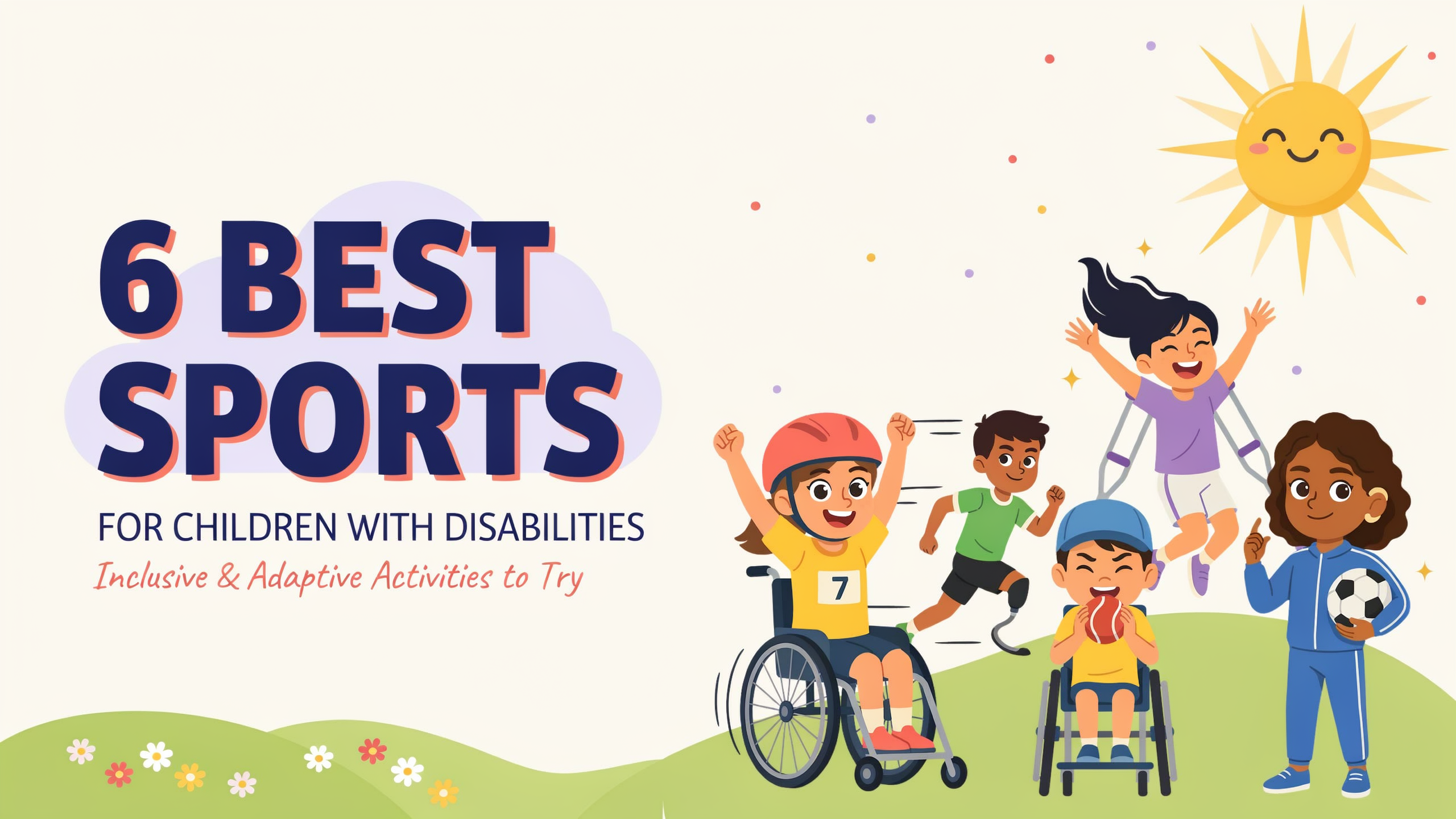
Finding a sport your child enjoys can be an exciting way to encourage movement, build friendships, develop new skills, and create positive experiences. But if you’re parenting a child with a disability, you may wonder which sports are accessible, what accommodations are available, and how to find a team that makes your child feel welcome.
The good news is that children with disabilities can participate in many different sports. Some programs offer adapted equipment, modified rules, additional coaching support, or opportunities to play alongside children with and without disabilities.
Whether your child has autism, ADHD, cerebral palsy, an intellectual disability, a physical disability, or a sensory impairment, there may be a sport that matches their interests and abilities.
In this guide, we’ll explore six sports for children with disabilities, ways to adapt each activity, and tips for finding an inclusive program.
Remember: There is no single best sport for every child. The right choice is one that considers your child’s interests, support needs, accessibility, and enjoyment.
Why Are Sports Important for Children With Disabilities?
Sports provide opportunities for children to move their bodies, practice skills, meet other children, and experience teamwork.
For children with disabilities, an inclusive sports program can also provide opportunities to participate in activities that may otherwise feel difficult to access.
Some potential benefits include:
- Physical development: Sports can provide opportunities to practice balance, coordination, strength, flexibility, and endurance.
- Social interaction: Team activities can create opportunities to meet peers, communicate, and develop friendships.
- Confidence: Learning a new skill and reaching personal goals can help children recognize their abilities.
- Independence: Participating in sports can give children opportunities to make choices, follow routines, and try new challenges.
- Emotional well-being: Enjoyable physical activities can support overall well-being and provide a positive outlet for energy.
- Belonging: Inclusive teams can help children feel welcomed and included in their communities.
The American Academy of Pediatrics encourages opportunities for children and adolescents with disabilities to participate in physical activity and sports. It also recognizes that families may need help identifying suitable activities, accommodations, and adaptive equipment.
6 Best Sports for Children With Disabilities to Try
Here are six sports to consider. Each can be adapted in different ways depending on the child’s abilities, interests, and support needs.
1. Swimming
Swimming is a popular activity for children with different abilities because lessons and recreational programs can often be adjusted to meet individual needs.
Some children enjoy learning basic water skills, while others may prefer recreational swimming or structured aquatic activities.
Potential benefits of swimming:
- Provides opportunities to practice whole-body movement.
- Encourages coordination and body awareness.
- Allows children to work toward individual goals.
- Can be an enjoyable recreational activity.
- Offers opportunities to participate in lessons or adaptive swim programs.
Ways to adapt swimming:
- Offer smaller classes or individual instruction.
- Use visual schedules to explain the lesson routine.
- Provide additional time to become comfortable with the pool environment.
- Ask about accessible pool entrances and transfer equipment.
- Use approved flotation or adaptive equipment when recommended by the instructor or healthcare professional.
Who might enjoy it?
Children who enjoy water activities, individual instruction, or working toward personal goals may enjoy swimming. However, some children have sensory sensitivities or medical needs that make pools challenging.
Important water safety reminder: Children with disabilities may need additional supervision and individualized water-safety support. Never assume that a child can swim safely because they have attended lessons. Maintain close, active adult supervision and follow the child’s healthcare and safety recommendations.
2. Soccer and Adaptive Soccer
Soccer is a familiar team sport that can be modified to make participation more accessible.
Traditional soccer involves running, kicking, passing, and working with teammates. Adaptive programs may use different ball sizes, modified rules, shorter playing periods, or additional support.
For children who prefer playing with peers, inclusive soccer can be a great opportunity to practice teamwork.
Potential benefits of soccer:
- Practices kicking and ball-control skills.
- Encourages communication and teamwork.
- Provides opportunities for movement and coordination.
- Helps children practice taking turns and following game routines.
- Creates opportunities to work toward shared goals.
Ways to adapt soccer:
- Use a larger, softer, or brightly colored ball.
- Create smaller playing areas.
- Reduce the number of players.
- Allow additional time to respond or move.
- Use visual markers to identify boundaries and goals.
- Offer seated or mobility-device-friendly adaptations when available.
Who might enjoy it?
Children who enjoy group activities, kicking balls, and playing with teammates may enjoy soccer. Children who prefer less competitive environments may benefit from recreational or skills-based programs.
Program to explore: TOPSoccer is a US Youth Soccer program designed to provide soccer opportunities for players with disabilities.
3. Basketball and Wheelchair Basketball
Basketball is another sport that can offer opportunities for children with different abilities.
Traditional basketball includes dribbling, passing, shooting, and teamwork. Adaptive basketball programs may modify equipment, rules, court setup, or the way players move around the court.
Wheelchair basketball is also an option for eligible athletes who use wheelchairs.
Potential benefits of basketball:
- Practices hand-eye coordination.
- Encourages teamwork and communication.
- Provides opportunities to practice passing and shooting.
- Helps children develop sport-specific skills.
- Creates opportunities to participate in group activities.
Ways to adapt basketball:
- Use a lighter or larger ball.
- Lower the basketball hoop when appropriate.
- Move closer to the basket.
- Allow extra time for passing and shooting.
- Use visual demonstrations of drills.
- Explore wheelchair basketball or other adaptive programs.
Who might enjoy it?
Children who enjoy balls, team games, and practicing individual skills may enjoy basketball. Some children may prefer shooting games or smaller-group activities instead of full games.
4. Track and Field
Track and field includes several activities, making it a flexible option for children with different interests and abilities.
Rather than focusing only on running, track and field can include walking, sprinting, wheelchair racing, throwing events, jumping, and other adapted activities.
Children can work on individual goals while participating in a team or organized program.
Potential benefits of track and field:
- Provides opportunities to practice endurance and coordination.
- Encourages children to work toward personal goals.
- Offers different activities within one sport.
- Can support confidence and independence.
- Allows for individual and group participation.
Ways to adapt track and field:
- Offer shorter distances.
- Allow walking instead of running.
- Use accessible track surfaces.
- Explore wheelchair racing or assisted movement options.
- Adapt throwing equipment.
- Provide additional rest breaks.
- Use clear visual markers for start and finish lines.
Who might enjoy it?
Track and field may be a good option for children who enjoy movement but do not necessarily want to participate in traditional team sports.
5. Gymnastics and Adaptive Cheerleading
Gymnastics and cheerleading offer opportunities to explore movement, balance, coordination, rhythm, and body awareness.
Some children enjoy learning individual movements, while others prefer group routines and music.
Adaptive gymnastics and inclusive cheerleading programs may modify routines, equipment, or expectations to support participation.
Potential benefits of gymnastics and cheerleading:
- Provides opportunities to practice balance and coordination.
- Encourages body awareness.
- Supports movement and flexibility.
- Creates opportunities for group participation.
- Allows children to learn routines and movement sequences.
Ways to adapt gymnastics and cheerleading:
- Use floor-based activities instead of elevated equipment.
- Break movements into smaller steps.
- Provide demonstrations and visual instructions.
- Allow seated movement options.
- Modify routines to accommodate different mobility levels.
- Use additional spotting or physical support only when appropriate and provided by trained staff.
Who might enjoy it?
Children who enjoy music, movement, dance, and learning routines may enjoy these activities.
Safety reminder: Gymnastics and cheerleading can involve falls, jumping, and physical demands. Choose a qualified instructor who understands your child’s needs and can provide appropriate modifications.
6. Adaptive Baseball
Baseball can be a great way for children to participate in a team sport while practicing batting, throwing, catching, and teamwork.
Traditional baseball may be challenging for some children, but adaptive baseball programs can change the experience to make participation more accessible.
For example, some leagues use softer balls, larger bases, shorter distances, or a batting tee.
Potential benefits of adaptive baseball:
- Practices hand-eye coordination.
- Encourages teamwork and communication.
- Provides opportunities to practice throwing and catching.
- Helps children learn game routines.
- Gives children opportunities to participate in a team environment.
Ways to adapt baseball:
- Use a batting tee instead of pitched balls.
- Provide larger or softer balls.
- Allow extra time to run or move between bases.
- Use visual signs or demonstrations.
- Adjust the playing field.
- Provide a buddy or volunteer when appropriate.
Who might enjoy it?
Children who enjoy hitting balls, playing outside, and participating in group activities may enjoy adaptive baseball.
Programs to explore: Little League Challenger Division and The Miracle League offer baseball opportunities designed for children and individuals with disabilities.
Other Adaptive Sports Your Child May Enjoy
The six sports above are a starting point, not a complete list. Depending on your child’s interests and local opportunities, consider these activities too:
| Sport | What makes it worth exploring |
|---|---|
| Adaptive tennis | Can use modified balls, court sizes, or wheelchair tennis rules |
| Boccia | A target sport that can be played with different levels of mobility |
| Horseback riding | Therapeutic and adaptive riding programs may offer individualized instruction |
| Adaptive cycling | Specialized bikes can support different mobility needs |
| Bowling | Lightweight balls, ramps, and adapted approaches may help participation |
| Martial arts | Some programs modify movements, routines, and instruction |
| Dance | Movement and routines can be adapted for different abilities |
| Sled hockey | Offers an adaptive ice hockey experience for eligible athletes |
How to Choose the Right Sport for Your Child
Choosing a sport should start with your child’s interests rather than what someone else thinks they should enjoy.
A child who loves music may prefer dance or cheerleading. Another child may enjoy swimming, baseball, or an individual activity.
Before registering, consider the following:
1. Ask Your Child What They Want to Try
Whenever possible, involve your child in the decision.
Show them pictures or videos of different sports. Visit a practice or attend a demonstration if the program offers one.
Give them opportunities to express what they like and dislike.
2. Consider Your Child’s Individual Needs
Think about your child’s mobility, communication, sensory preferences, medical needs, and ability to participate in group activities.
A sport may need modifications, but that does not automatically mean it is unavailable to your child.
Your child’s pediatrician, physical therapist, occupational therapist, or other care team members may help identify appropriate activities and accommodations.
3. Look for Inclusive Coaches
A welcoming coach can make a major difference in a child’s experience.
Ask whether coaches have experience supporting children with disabilities and whether they are willing to work with families to identify reasonable adaptations.
4. Visit the Facility
Before signing up, check whether the facility is accessible.
Consider:
- Accessible entrances and parking.
- Restrooms and changing areas.
- Accessible seating and viewing areas.
- Equipment storage and availability.
- Noise levels and sensory environment.
- Safe transportation and drop-off arrangements.
5. Start With a Trial Class
If possible, ask whether your child can attend a trial session before committing to a full season.
This gives your child an opportunity to meet the coach, explore the environment, and decide whether the activity feels enjoyable.
Questions to Ask Before Joining an Adaptive Sports Program
Use these questions when contacting a sports organization or coach:
- Do you have experience working with children with disabilities?
- Can activities or rules be modified?
- Are adaptive equipment or equipment loans available?
- Can parents or caregivers observe practices?
- What is the coach-to-participant ratio?
- Is the facility physically accessible?
- Can children participate at different skill levels?
- Are trial sessions available?
- What safety procedures are in place?
- Are scholarships or reduced registration fees available?
You do not need to find a program that has every accommodation already in place. What matters is whether the organization is willing and able to discuss your child’s needs and plan for meaningful participation.
Where Can You Find Adaptive Sports Programs?
Finding the right program can take some research, but several organizations can help families get started.
- Play Adaptive Sports: Search for adaptive sports programs, activities, and facilities by ZIP code or town.
- Special Olympics: Explore sports training and competition opportunities for people with intellectual disabilities.
- Move United: Find adaptive sports programs and recreational opportunities through its network.
- TOPSoccer: Explore soccer opportunities for players with disabilities.
- Little League Challenger Division: Learn about baseball participation for children with physical and intellectual disabilities.
- The Miracle League: Find inclusive baseball opportunities.
You can also ask your child’s school, recreation department, local YMCA, children’s hospital, or therapy team about adaptive sports programs in your community.
Frequently Asked Questions About Sports for Children With Disabilities
What are the best sports for children with disabilities?
Swimming, adaptive soccer, basketball, track and field, gymnastics, cheerleading, and adaptive baseball are all options worth exploring. The best sport depends on the child’s interests, abilities, support needs, and available programs.
Can children with autism participate in sports?
Yes. Children with autism can participate in many recreational and competitive sports. Visual schedules, predictable routines, clear instructions, sensory accommodations, and supportive coaches may help some children participate more comfortably.
What sports can children with physical disabilities play?
Depending on their individual abilities and access needs, children with physical disabilities may enjoy swimming, wheelchair basketball, wheelchair tennis, adaptive cycling, boccia, track and field, and adaptive baseball.
Are there sports for children with intellectual disabilities?
Yes. Special Olympics offers sports training and competition opportunities for people with intellectual disabilities. Local programs may include swimming, basketball, athletics, soccer, bowling, and other activities.
Can a child with a disability join a regular sports team?
In many situations, yes. Some children can participate in traditional community sports with accommodations, while others may prefer an adaptive or disability-specific program. Talk with the coach about your child’s needs and possible modifications before registering.
How do I know if a sport is safe for my child?
Consider your child’s medical history, mobility, physical abilities, and any activity-specific risks. Discuss questions with your child’s pediatrician or care team, especially if your child has medical restrictions or needs specialized equipment.
Are adaptive sports expensive?
Costs vary. Some programs charge registration fees, while others offer free participation, equipment loans, scholarships, or financial assistance. Ask the organization about available support before deciding that a program is out of reach.
Final Thoughts: Find a Sport Your Child Can Enjoy
Every child deserves opportunities to play, move, learn, and feel included. A disability should not automatically prevent a child from exploring sports or recreational activities.
Swimming, soccer, basketball, track and field, gymnastics, and adaptive baseball are just a few options families can consider.
Start by asking your child what interests them. Then look for a welcoming program with coaches who are willing to understand their needs and make appropriate accommodations.
Your child does not have to be the fastest runner, strongest swimmer, or most experienced player to benefit from participating. Sometimes the biggest achievement is discovering an activity they love and feeling like they belong.
Let your child explore, try something new, and enjoy being part of the game
Helpful Resources
- American Academy of Pediatrics: Physical Activity for Children and Teens With Disabilities
- Play Adaptive Sports
- Special Olympics
- Move United
- Stanford Medicine Children’s Health: Sports and Children With Special Needs
This article is for informational purposes only. Sports participation should be based on each child’s individual needs. Consult your child’s healthcare team when you have questions about medical restrictions, physical activity, adaptive equipment, or safety.


